

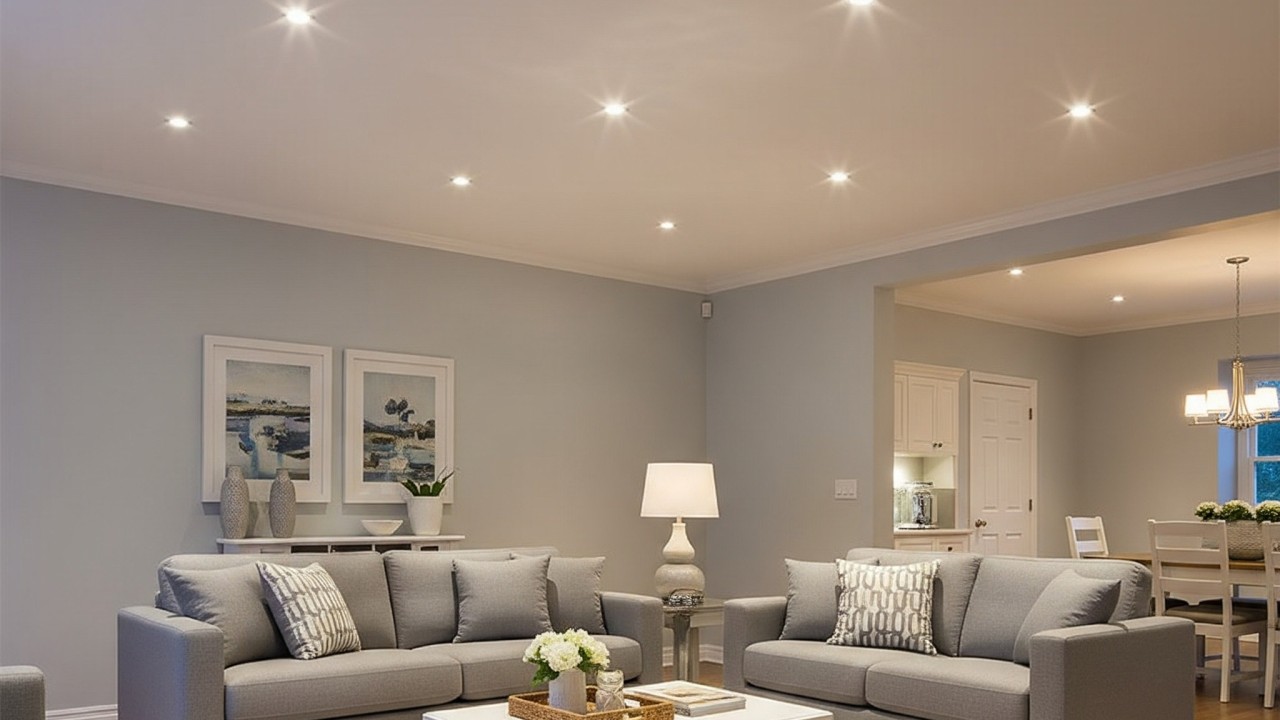
Professional interior design is fundamentally dependent on lighting architecture. Homeowners frequently spend thousands of dollars on high-end furniture, premium flooring, and curated paint palettes, only to wonder why their finished space feels flat, clinical, or uninviting. The culprit is almost always flat, single-source illumination. Relying on a grid of uniform overhead recessed lights washes out textures, creates harsh facial shadows, and flattens the dimensional depth of a room.
To create an environment that feels dynamic, warm, and highly functional, you must think of lighting as a structural system composed of multiple distinct layers. Interior designers achieve this balance through a process known as lighting layering, which seamlessly weaves together three specific categories of illumination: ambient, task, and accent lighting. Mastering this trifecta allows you to control the mood, scale, and utility of any room in your home.
The Foundation: Ambient Lighting
Ambient lighting serves as the base layer of illumination for any interior space. Its primary purpose is strictly utilitarian: to provide a uniform, comfortable level of light that allows occupants to navigate a room safely and perform basic daily activities without straining their eyes. Ambient light acts as a substitute for natural daylight, filling the volume of the room with a soft, overarching glow.
Key Sources of Ambient Light
-
Recessed Downlights: When spaced correctly across a ceiling plane, recessed cans provide an even grid of foundational illumination.
-
Flush Mount and Semi-Flush Mount Fixtures: Positioned in the center of a room, these fixtures disperse light outward and downward, acting as a central anchor.
-
Chandeliers and Large Pendants: While often serving as decorative focal points, these large suspended fixtures radiate a broad wash of light that contributes heavily to the ambient baseline.
-
Natural Daylight: Windows, skylights, and glass doors provide the ultimate ambient layer during daytime hours.
Because ambient lighting is designed to cover a broad surface area, it can easily become flat and monotonous if overused. It should never be bright enough to read fine print by, nor should it be the sole source of light in a room. To make this layer effective, it must be paired with dimmers, allowing you to scale back the intensity as evening approaches and secondary layers take over.
The Engine: Task Lighting
While ambient light blankets a room uniformly, task lighting provides concentrated, directional illumination precisely where specific physical activities take place. This layer is engineered to increase visual acuity, reduce eye strain, and prevent shadows from falling across your workspace. Whether you are slicing vegetables on a kitchen island, reading a book in bed, or applying makeup at a vanity mirror, task lighting provides the focused energy required for precision.
Common Applications of Task Lighting
-
Under-Cabinet LED Strips: In a kitchen, overhead ambient lights cast a shadow from your body directly onto the countertops. Under-cabinet lighting cuts through that shadow, illuminating the food preparation zone with crisp, bright light.
-
Desk and Reading Lamps: Adjustable-arm lamps allow you to position light directly over reading materials or computer keyboards, containing the light to a specific zone without disrupting the rest of the room.
-
Vanity Sconces: Mounting fixtures at eye level on both sides of a bathroom mirror provides balanced horizontal light across the face, eliminating the deep eye-socket shadows caused by overhead downlights.
To optimize task lighting, pay close attention to placement and color temperature. A task light should be positioned to minimize glare on surfaces like computer screens or polished stone countertops. It should also feature a slightly higher lumen output than your ambient layer to provide a clear contrast between the workspace and the surrounding environment.
The Artistry: Accent Lighting
Accent lighting is the purely decorative layer that injects drama, character, and architectural depth into an interior space. This layer is not concerned with pathfinding or workspace visibility; instead, it is used to guide the human eye. By creating points of visual interest, accent lighting highlights architectural features, textured surfaces, artwork, and prized possessions, drawing attention away from less attractive areas of a room.
Creative Accent Techniques
-
Picture Lights: Hardwired directly above a framed painting or photograph, these dedicated fixtures cast a precise, narrow beam of light down the face of the artwork, making it pop against the wall color.
-
Track Lighting and Directional Monopoints: Outfitted with narrow spot bulbs, these adjustable fixtures can be angled to pinpoint sculptures, architectural columns, or indoor botanicals.
-
Cove and Toe-Kick Lighting: Hiding linear LED strips inside a ceiling cove or underneath a floating vanity cabinet creates a continuous, dramatic wash of indirect light that makes heavy structures appear weightless.
-
Uplighting: Placing small canister lights on the floor behind a large plant or furniture piece projects dramatic shadows upward onto the wall and ceiling, adding texture and height to a room.
To achieve a true accent effect, the illumination must obey the rule of contrast. As a general industry standard, accent lighting needs to be at least three times brighter than the surrounding ambient light level to successfully draw the eye and create a compelling visual hierarchy.
Structuring the Harmony: A Room-by-Room Blueprint
An effective lighting strategy requires blending these three layers seamlessly based on the specific functions of an individual room. The table below outlines how the layers combine to create a balanced, dynamic ecosystem within different living zones.
By ensuring every room features at least one element from each of the three categories, you avoid the sterile look of commercial spaces or the frustrating darkness of poorly planned residential interiors.
Frequently Asked Questions
What is the ideal color temperature for residential interior lighting?
For most residential spaces, a warm white color temperature ranging between 2700K and 3000K is ideal. This spectrum mimics the soothing glow of traditional incandescent bulbs and firelight, which complements natural wood tones, fabrics, and human skin tones. However, for task-intensive environments like home offices, workshops, or utility rooms, shifting to a crisper neutral white around 3500K to 4000K can enhance alertness, focus, and visual clarity.
How do I calculate the total amount of light needed in a room?
Lighting designers use foot-candles or lumens per square foot to calculate needs. First, determine the square footage of the room. As a baseline rule, living rooms and bedrooms require roughly ten to twenty lumens per square foot, while kitchens, bathrooms, and task-heavy work environments require a much higher intensity of roughly seventy to eighty lumens per square foot. Multiply the square footage by the required lumen baseline to find your target total output across all fixtures combined.
Why should I choose dimmers over standard on-off light switches?
Dimmers are the single most important tool for successful lighting layering. They give you the flexibility to transform a room’s functionality instantly. A kitchen needs full, bright ambient and task light during morning meal prep, but benefit from dimmed ambient light and active accent lighting in the evening to create a relaxed dining atmosphere. Dimmers also reduce energy consumption and extend the operational lifespan of your light bulbs.
What is the difference between a lumen and a watt?
A watt measures the amount of electrical energy a bulb consumes to produce light, whereas a lumen measures the actual amount of visible light emitted by the bulb. With the advent of modern LED technology, tracking wattage is no longer an accurate way to gauge brightness. An LED bulb can produce the exact same number of lumens as an old incandescent bulb while using only a small fraction of the wattage. Always shop for light bulbs based on lumen output rather than wattage.
Can a light fixture serve as more than one layer simultaneously?
Yes, certain fixtures are inherently multi-functional. For example, a low-hanging pendant light over a dining table serves as a decorative ambient light source for the room, but it also acts as a direct task light for the tabletop surface below. The key to multi-functional fixtures is ensuring they are equipped with separate controls or dimming capabilities so you can isolate their functional output depending on the time of day.
How do I avoid creating glare on television screens and computer monitors?
To eliminate distracting reflections, avoid placing ambient downlights or task lamps directly opposite or immediately above a screen. Instead, utilize indirect lighting techniques, such as placing an LED light strip behind the television monitor to cast a soft glow against the back wall. This technique, known as bias lighting, reduces eye strain caused by a bright screen in a dark room without throwing direct light onto the glass display panel.
